Home

Subscriber Login

CAB Subscribers log in here:

User Name: Password:
 

FAQ for Motor Carriers

Are you a motor carrier?

Click Here

for FAQ and

financials submission

Who We Are PDF Print E-mail

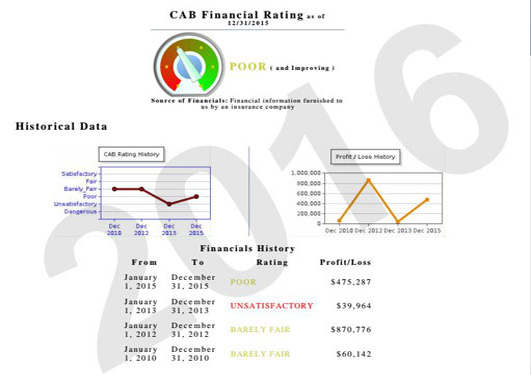
CAB LogoFor over 70 years, Central Analysis Bureau, Inc. has been an important part of the underwriting plan for the commercial auto and inland marine insurance industry. With its unique understanding of all aspects of the trucking industry, CAB has developed a proprietary rating system which, based on a series of specific ratios and equations, is utilized to analyze a motor carrier’s financial records to determine the financial strength of that carrier. For years, the name CAB has been synonymous with financial analysis, and an acceptable CAB rating is a prerequisite for many underwriters.

 
Volume 13, Edition 8 PDF Print E-mail
Tuesday, 31 August 2010 13:36

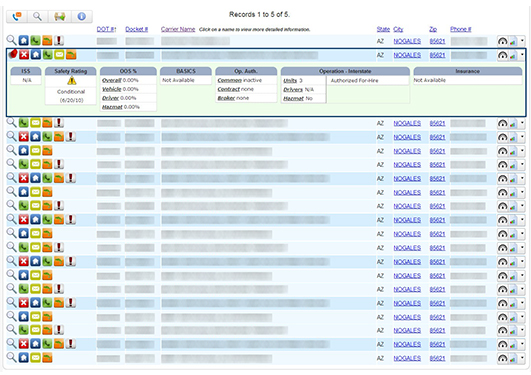
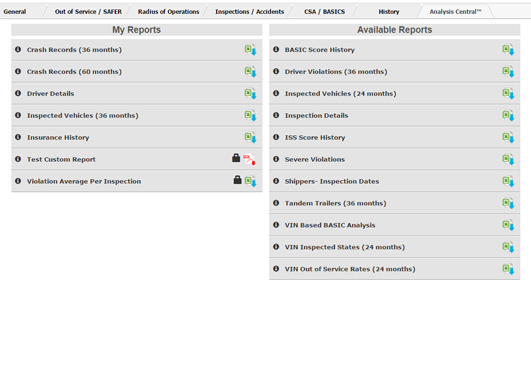
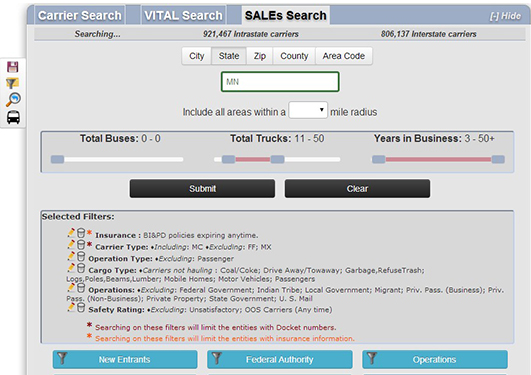
Be on the lookout for our announcement later this week launching our new and improved Carrier and Vehicle Research System (the CAB subscriber website for those of you IT challenged like myself) to our premium subscribers.  We are very excited about this and look forward to your comments and suggestions.

Here we are at the end of the summer once again. Hope you all enjoyed your summer and got a chance to take some time off.  We have had many calls from underwriters concerning the upcoming termination of the BMC-32 endorsement. Right now there is no specific answer on what steps an underwriter should take to terminate existing endorsements. There is no rulemaking which automatically deletes them from any policy.  We would be happy to discuss options with any subscriber to our services.  This month we report:

NAFTA
- Mexico is getting tired of waiting for the U.S. to move forward and open the border.  More retaliatory tariffs on U.S. exports have been imposed to pressure the government to take action. Pork, cheese, pistachio nuts, ketchup and citrus fruits are among the new products subject to levies as high as 25%. Those Senators involved in the Transportation Department’s 2011 budget have included a provision in the proposed legislation which would require that that the President come up with a plan by October.

DRUG TESTING
- The DOT has issued new rules on drug testing for transport workers. The rule will become effective October 1, 2010. The DOT believes that it may classify 8,000 more transport workers as illegal drug users based upon these new rules. The DOT is focusing on popular drugs, including ecstasy, methamphetamines and cocaine and will add a new marker to identify heroin use.  The DOT also reported that the sweep which it undertook in June removed 109 commercial bus and truck drivers from the roads and more than 175 carriers face enforcement actions as a result of the inspections.

CSA 2010 CHANGES
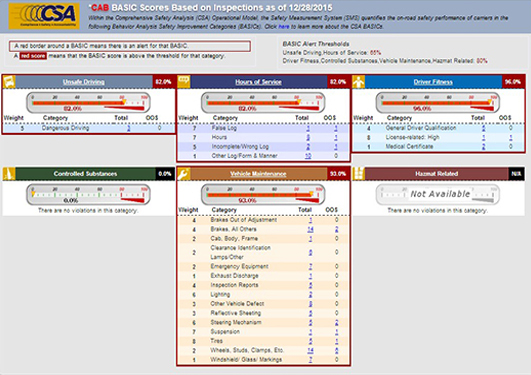
- With the system not yet even in place, it is already being changed.  FMCSA agreed to lower the importance of two of its safety categories when it rates carriers.  Cargo securement and driver fitness will carry less weight as studies by some organizations have determined that there is minimal correlation between those categories and accidents.

HOURS OF SERVICE
- The FMCSA has sent the new proposed rules to the Office of Management and Budget for review. Some motor carriers have indicated that a possible reduction in hours to 9 hours, down from the current 11 hours, would result in a reduced driving capacity of about 250,000 trucks.   In related news the ATA has renewed litigation against the FMCSA to force a rule spelling out what evidence fleets need to retain in order to verify their drivers’ logbooks. The FMCSA has requested that the court hold the case in abeyance while it tries to get everything done as quickly as possible.

 
2009 Review and Look Ahead To 2010 PDF Print E-mail
Monday, 25 January 2010 12:07


Simple survival was the main objective for most of the country in 2009.  The trucking industry held on and hoped for the best. The events of 2009 were unprecedented as industry and individuals faced financial disaster.  With so many industries affected by the dramatic drop in finances, there was little the trucking industry could do to minimize damage to its own operations.  Overall the country saw over 1.4 million reported bankruptcy filings, both personal and corporate, to say nothing of the number of companies which simply closed up shop.  The overall decline in truck tonnage pushed many carriers out of the industry and forced others to operate on an even smaller shoe string. Fleet size shrunk and profits dropped as carriers looked for new and innovative ways to stay in business. Even truck stops disappeared as more states were forced to close them in the face of budget constraints.

The inauguration of Barack Obama changed the political landscape.  With a new administration we saw new leaders emerge in the different agencies, all with their own agenda.  Ray LaHood took over the helm at the DOT, after serving for many years on the House Transportation and Infrastructure Committee and, after that, on the House Appropriations Committee.,Mr. LaHood has indicated that he will be leading a series of meetings throughout the country to assist in getting feedback on what is needed for the new highway bill.   Anna Ferro now leads the FMCSA and has set forth her own agenda for the coming decade, with a primary focus on safer operations of the trucks on the road.  The economic stimulus package moved monies into the country’s infrastructure. The American Recovery and Reinvestment Act included a decidedly ambitious undertaking to improve infrastructure, approving funding for over 11,300 projects which is anticipated to create tens of thousands of jobs.